The Correspondent by Virginia Evans
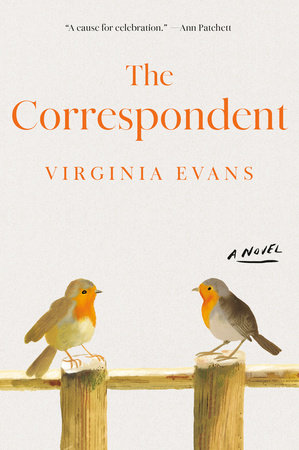
(New York: Crown, 2025), 281
Seasons of life, grief over the loss of a child, and how we are happier than we know (27-28):
There is an articulation of life one hears again and again. People will say, 'oh, this is only a season. You know what I am referring to, don't you? I mean how if someone is in difficulty they'll say 'it's only a season. Or if someone is having a new baby and in the sleepless nights, an older woman will comfort with this idea that the expanse of time is a season— a winter, I suppose? (rather, a hurricane season!)—and the season will change eventually to something sunnier. I take issue with this. There are, by definition, four seasons that repeat in measured pattern year after year. As there is no such rhythm in the human life, I have to think that when it comes to seasons we all get one round. We are born and grow through childhood in spring. We live those glorious, lively, interesting years of our twenties, thirties, forties in summer. We settle into ourselves in autumn, that cool but not yet cold time, rich and aromatic. And in winter we age (brutally) and die. One turn of the seasons per person, unless it's cut short, like it was for Gill, and like it was for Quintana Roo. I suppose, on this schedule, we'd say your John had made it to fall. My mother died in her summer.
But I think of life rather like a long road we walk in one direction. By and large a lonesome walk out in the wildness of hills and wind. Mountains. Snow. And sometimes there is someone to come along and walk with you for a stretch, and sometimes (this is what I'm getting to) sometimes you see in the distance some lights and it heartens you, the lone house or maybe a village and you come into the warmth of that stopover and go inside. Maybe you have a warm supper and stay a night or maybe you stay there a few years. I had one of those stopovers when the children were young, just before Gilbert died, and Daan and I were happy, even though I didn't know it was happiness at the time because it felt like busyness and exhaustion and financial stress and self-doubt. But Gilbert's death was a swift ejection back out to the loneliest bitter stretch of road, and that is the bone crunching grief. I'm not saying I've not come in from the wind a few more times in my life; I have. And of course I have my other children, and they have been a joy and comfort. I'd like to say they were enough, but it wasn't enough, and that is another avenue of grief, but anyway my point is I tire of people speaking of seasons as if you can count on three months of winter turning out three months of summer on repeat. It's not so. The stretches on the high, wind-blown road are far commoner than the stopovers in comfort, and aren't we always trying to get back to the happier times? I think that is what it feels like, with Gill. I've spent my life trying to get bak to having him even though I know I cannot.
The practice of writing letters (45-47):
You also asked after the meaning of my practice of letter writing, calling it quaint and impractical...
Imagine that all you have said to another, all the commentary you have exchanged with friends over drinks, over the phone with colleagues and distant relatives, all the prattle sent quickly, mindlessly over e-mail, messages typed into your cellular phone, and really, the sum of this interpersonal communication is the substance of your life, relationships being, as we know by now in our old ages, the meat of our lives; but all of that is gone. Vanished! And one day, Mr. Watts, you yourself will be gone. Perhaps if you have children, they will remember you; if you have grandchildren, they, God allowing, may also retain a few fragments of memory including you, but their children will not. They may keep some old photos in a book on a shelf, and perhaps two or three times in a lifetime may turn the page and find your face and think, Ah, yes, doesn't Jimmy resemble this great-great-grandfather Mick, and continue to turn the page, and so that will be what is left of you, nearly erased, in fewer than three generations, and your life, the life you see from the inside, right now, as monumental, will be reduced to the blood in their veins and perhaps, if you are lucky, a distant namesake, a name plucked from the family tree that has come back in vogue after seventy-odd years as fashionable things tend to do and slapped on a newborn baby who will know nothing of YOU.
And yet, if one has committed oneself to the page, the tragedy I've just laid out will not apply. Imagine, the letters one has sent out into the world, the letters received back in turn, are like the pieces of a magnificent puzzle, or, a better metaphor, if dated, the links of a long chain, and even if those links are never put back together, which they will certainly never be, even if they remain for the rest of time dispersed across the earth like the fragile blown seeds of a dying dandelion, isn't there something wonderful in that, to think that a story of one's life is preserved in some way, that this very letter may one day mean something, even if it is a very small thing, to someone?
Write letters to people, even if they are more "important" than you (55):
I began writing letters and became obsessed. Most often, when I wrote, I got a letter back. This surprises people, but I have found that most people write back.
Reading (99):
I could never trust a person who wasn’t a reader.
What we have to show (126):
My life has felt enormous but what do I have to show for it?
Topic: Novel
Source
- Madj: Russell Family Book Club
Created: 2026-01-20-Tue
Updated: 2026-01-28-Wed