A Song for Nagasaki by Paul Glynn
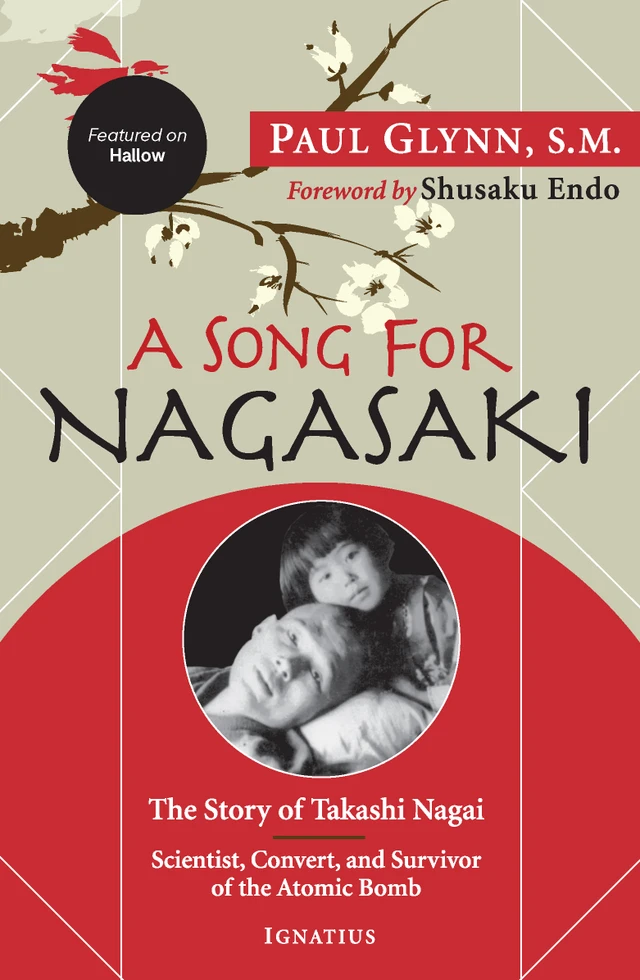
(San Francisco: Ignatius, 1988), 267
Notes/Questions:
- Blend of eastern and western religion/philosophy in Catholic Japan? (and including eastern books in the canon)
- Japanese parenting: "Send the child you love away on a journey. Immaturity will be the price of parental overattachment." (23)
- Pensées as key to his conversion.
- Two falsehoods he identifies: overconfidence in reason, or resignation to stupidity (37)
- "Only in Christ can the paradox of man's wretchedness and his greatness be solved." (136)
- Urakami Christians
- Simple living: the 10 square foot hut (71, 192, 200)
- "You best meet the Supernatural if you make your heart like a hut that is empty of everything but the bare essentials." (202)
- "He considered it adequately furnished when it possessed a New Testament, a crucifix, and a statue of Mary." (239)
- "If something is true, it is eternal." (76)
- Simplicity and truth (81)
- Awful images from Manchurian war: "small orphans holding desperately onto the corpses of their parents" (97)
- "God is always in charge." (111)
- "Though the fighting was worse, he enjoyed peace and freedom in his heart." (129)
- Work ethic and work as service (119)
- Make your work a poem (233)
- Almsgiving: "Assistance is authentic when it helps restore a person's dignity." (120)
- "War brings the best out of men as well as the worst." (129)
- "Don't just study the scriptures, pray them." (131)
- 257
- Science as prayer: "a laboratory could be the same as the cell of a monk" (137)
- Augustine: Just War Theory (143)
- Medicine: "Doctors, we have to be realists, and one day every one of us must become a patient, a terminal patient." (145, cf. Being Mortal)
- Medicine as a vocation (234)
- "Was not that the best way to end up, worn out in the service of your fellow men?" (146)
- The Rosary (132, 173, 205)
- After the bomb: "The heavens and the earth will pass away, but my words will never pass away." (175, cf. Mt-24)
- "God's Providence chose Urakami and carried the bomb right above our homes. Is there not a profound relationship between the annihilation of Nagasaki and the end of the war? Was not Nagasaki the chosen victim, the lamb without blemish, slain as a whole burnt offering on an altar of sacrifice, atoning for the sins of all the nations during World War II?...The Lord has given; the Lord has taken away. Blessed be the name of the Lord. Let us be thankful that Nagasaki was chosen for the whole burnt sacrifice! (188-189, cf. Jb-01)
- "All that I am concerned about is what his plans are for me; the only life that interests me is one lived for him...one day at a time, supported by prayer." (238)
- "If we have Nagai's kind of faith in the Father's Providence and in Christ's all-embracing death, we can meet anything with peace." (259)
- "Let us declare our priorities by building a church first." (196)
- Promoted the Sermon on the Mount as the practical charter for world peace (212)
- "Suffering, gracefully accepted, refines the human heart, and the experience of darkness sharpens the vision of the spirit." (225)
- "Physical suffering is an opportunity to gather treasure for heaven." (231)
- "The Mass, like so much else in life, experienced rather than explained." (235)
- Nagasaki vs Hiroshima response (241)
- Fasting (245)
- Epilogue: "If we have Nagai's kind of faith in the Father's Providence and in Christ's all-embracing death, we can meet anything with peace." (259)
- Boeing B-29 Superfortress - Air Force Museum: "The B-29 on display, Bockscar, dropped the Fat Man atomic bomb on Nagasaki on Aug. 9, 1945, three days after the atomic attack against Hiroshima."
Topic: Atom
Source
Created: 2025-03-17-Mon
Updated: 2026-04-28-Tue